
As your baby approaches the mobility stage—usually around six to nine months—the desire to help them explore the world is natural. They are reaching, rolling, and maybe even starting to crawl. Many parents turn to traditional wheeled baby walkers as a way to encourage this newfound independence and keep their baby entertained.
The question, “Are walkers bad for babies?” is incredibly common, and it speaks directly to the heart of balancing safety, development, and convenience. In January 2026, the guidance from pediatric and safety experts in the United States remains consistent: traditional, wheeled baby walkers are discouraged due to significant safety risks and the potential influence they may have on typical developmental patterns.
If you currently have a walker or are considering purchasing one, please know that your concern is shared by many. This article is designed to offer calm, clear guidance on the safety issues involved, how mobility develops naturally, and what safe, engaging alternatives exist for your little one.
The Essential Safety Concern: Why Walkers Are Discouraged
When discussing baby products, safety must always come first. The primary reason major organizations, including the American Academy of Pediatrics (AAP), strongly advise against the use of traditional wheeled walkers is the extremely high rate of preventable injuries.
Walkers give babies mobility they are not yet neurologically or physically ready for, often resulting in dangerous accidents. Because a baby’s center of gravity is higher and they lack the necessary balance control, even small shifts can lead to serious incidents.
Understanding the Key Injury Risks
- Falls Down Stairs: This is by far the most common and severe hazard. A baby in a walker can move quickly (up to several feet per second) and cover distance rapidly. Even when safety gates are installed, parents sometimes forget to close them completely, or the baby may push the gate open or bypass it quickly. A fall down a full flight of stairs can result in catastrophic head injuries.
- Access to Hazards: Being elevated and mobile allows babies to reach objects they normally couldn’t. This includes dangerous items like hot liquids on counters or stovetops, medications, cleaning supplies, or pull cords for blinds—all of which lead to burns, poisoning, or strangulation hazards.
- Tipping Over: Walkers can easily tip, particularly when a baby rolls over uneven flooring, hits a rug edge, or tries to maneuver near a small drop. This risk increases if the baby is trying to reach a nearby object.
It is important to understand that these injuries often occur even when a caregiver is present. The speed and unexpected nature of the incident make timely intervention nearly impossible. Because of these serious risks, many safety experts advise removing wheeled walkers entirely from the home environment.
Developmental Impact: Walkers and Milestones
Beyond safety, parents often wonder if walkers genuinely help their baby learn to walk faster. It may seem logical that providing assistance will speed up the process, but developmental science suggests the opposite is often true.
Learning to walk is a complex process that relies on babies achieving specific motor milestones in sequence, such as sitting, crawling, pulling up, cruising, and balancing. These milestones build the necessary muscular strength, spatial awareness, and balance control.
How Walkers May Alter Typical Development
In the traditional sense, a baby learns to walk by practicing the natural motions required for upright movement, which involves bearing weight on their feet and navigating space independently.
Walkers can sometimes change the way a baby moves by:
- Muscle Imbalance: Walkers may encourage babies to use their toes rather than their whole foot, leading to a “tip-toe” gait. This can potentially strengthen the wrong muscles or interfere with the development of the necessary hip and trunk muscles required for stable walking.
- Delayed Cruising and Crawling: The core strength and coordination gained from sustained floor time, crawling, and pulling up are essential. When a baby spends significant time in a walker, they bypass some of this critical developmental practice. This means that, paradoxically, using a walker may sometimes slightly delay independent walking, rather than encouraging it.
- Altered Perception of Gravity: Learning to walk requires making small mistakes—falling and recovering—to understand gravity and balance. Walkers support the baby’s weight unnaturally and prevent them from experiencing these necessary micro-falls, which are crucial for learning to self-correct and coordinate movement.
While some babies use a walker and walk right on time, this success is usually attributed to their natural trajectory, not the device itself. The general consensus among pediatric physical therapists is that time on the floor offers far superior developmental benefits.
Safe Alternatives to Support Mobility and Play
The goal is always to encourage safe exploration and strengthen your baby’s muscles naturally. If you are looking for ways to keep your baby engaged while fostering their developing coordination, there are excellent, safer alternatives.
Stationary Activity Centers and Jumpers
Unlike traditional wheeled walkers, stationary activity centers (sometimes called saucers) and doorway jumpers are typically considered safer options. The baby remains in one contained location, eliminating the risk of reaching hazards or falling down stairs. These devices often include engaging toys, music, and lights, providing excellent entertainment.
A note on use: Even with stationary devices, moderation is key. It is recommended to limit the time a baby spends in these seated devices to 15 or 20 minutes at a time, several times a day. Floor time is still paramount for core development.
The Power of Floor Time
Nothing replaces supervised time on the floor. This is where a baby learns proprioception (awareness of their body in space) and coordinates their large motor groups. Encourage:
- Tummy Time: Essential for building the neck, shoulder, and core muscles needed for sitting and crawling.
- “Cruising” Environments: Set up safe, open areas where your baby can pull themselves up on furniture (like a stable couch or ottoman) and move laterally while holding on. This mimics the true preparation for walking.
Push Walkers (The Safe Walker Alternative)
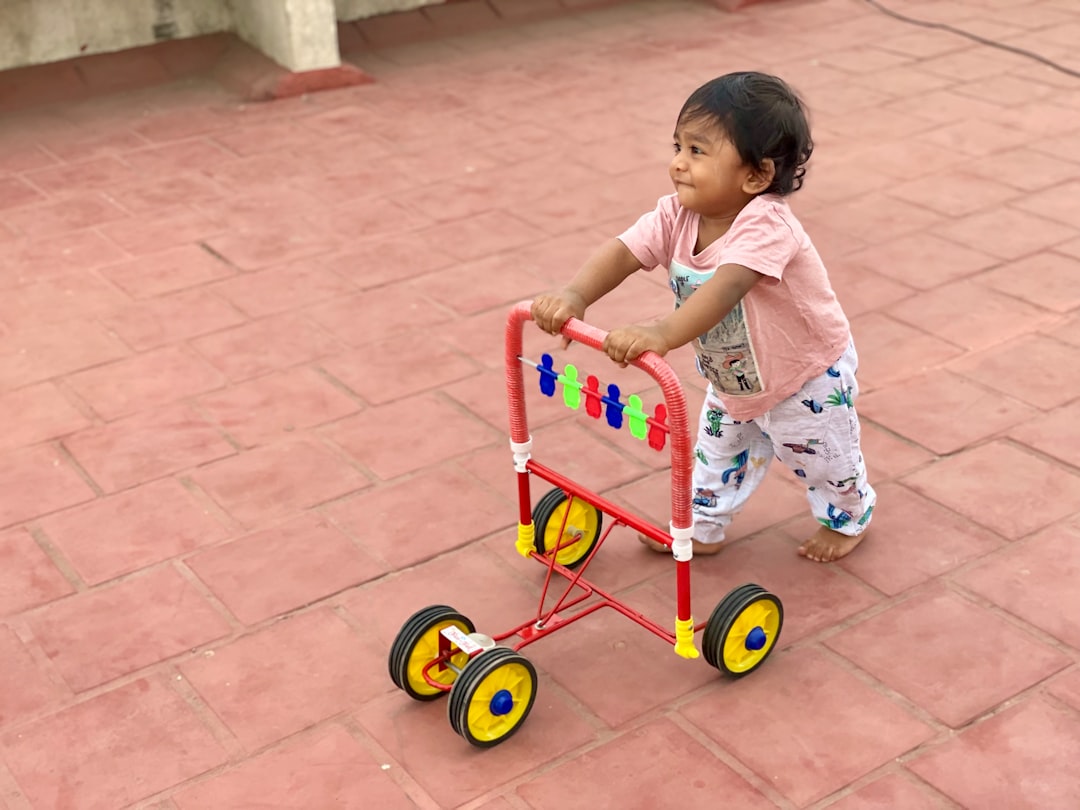
Once your baby is already capable of pulling themselves to a stand and cruising independently—meaning they are developmentally ready to bear their own weight—a push walker (a stable toy that they push along the floor) can be a great tool. These devices require the baby to provide the propulsion and support themselves, promoting a more natural gait. Always ensure the base is wide and weighted to prevent tipping.
Realistic Expectations for Developmental Milestones
Parenting often involves comparing milestones, but it’s helpful to remember that development occurs across a wide spectrum. Every baby is unique, and they will reach their motor milestones on their own schedule.
Typically, independent walking is achieved between nine and eighteen months. If your baby is taking longer, that is often perfectly normal. Focus on providing diverse opportunities for movement—lots of space to roll, scoot, crawl, and pull up—and trust that their development will follow its natural course.
If you are observing that your baby is significantly lagging behind the typical age ranges for sitting or crawling, or if you notice a consistent reliance on toe walking outside of any assistive device, it is always a good idea to bring this up with your pediatrician.
When to Consult Your Pediatrician
We are here to offer guidance and support, but only your healthcare provider can evaluate your baby’s specific health and developmental trajectory. You should always feel comfortable reaching out to them if you have concerns.
Consider consulting your pediatrician if:
- Your baby seems unusually floppy or rigid when held.
- They do not show interest in weight-bearing on their legs when supported by an age where that is typical (usually around 6 to 9 months).
- You notice a persistent motor skill asymmetry (e.g., they only crawl or reach using one side of their body).
- You have persistent concerns about their physical development, especially related to balance or muscle tone.
Even if it turns out to be nothing, bringing up your concerns provides valuable information to the provider and offers you vital reassurance.

FAQ: Understanding Walkers and Safety
Are stationary activity centers safe for babies?
Generally, yes, stationary activity centers (those without wheels) are considered much safer than traditional walkers because the baby cannot move rapidly toward hazards. However, limit usage to short, supervised sessions to ensure they still get plenty of floor time.
Do baby walkers really delay walking?
While the delay may be slight and isn’t universal, experts suggest that walkers can sometimes interfere with the natural muscle development and balance skills gained from crawling and cruising. Time spent in a walker is time not spent practicing the essential core skills needed for independent walking.
When can my baby use a push walker safely?
A push walker is appropriate once your baby is already pulling themselves up to stand and can cruise (walk while holding onto furniture). They should be able to initiate movement and bear their own weight. Always use a wide, sturdy push walker on level ground.
I used a walker for my older child. Should I worry?
There is no need for worry or guilt. Parental advice changes over time as more data becomes available on safety and development. The best thing you can do now is prioritize safe alternatives and plenty of floor time for your current baby.
***
Friendly Disclaimer: This article is for informational purposes only and does not replace professional medical advice. If you have concerns about your baby’s health or development, please consult your pediatrician or a licensed healthcare provider.